Artificial lighting is essential in modern environments, but when it’s poorly designed, it can create more problems than it solves.
You might have heard the term “Dark Sky lighting” or “Dark Sky compliance” mentioned in project discussions, council requirements or specifications. But what does it actually mean, and why is it becoming more important in commercial lighting design?
In this guide, we break down what Dark Sky lighting is, why it matters, and how it can benefit your next project.
What is Dark Sky Lighting?
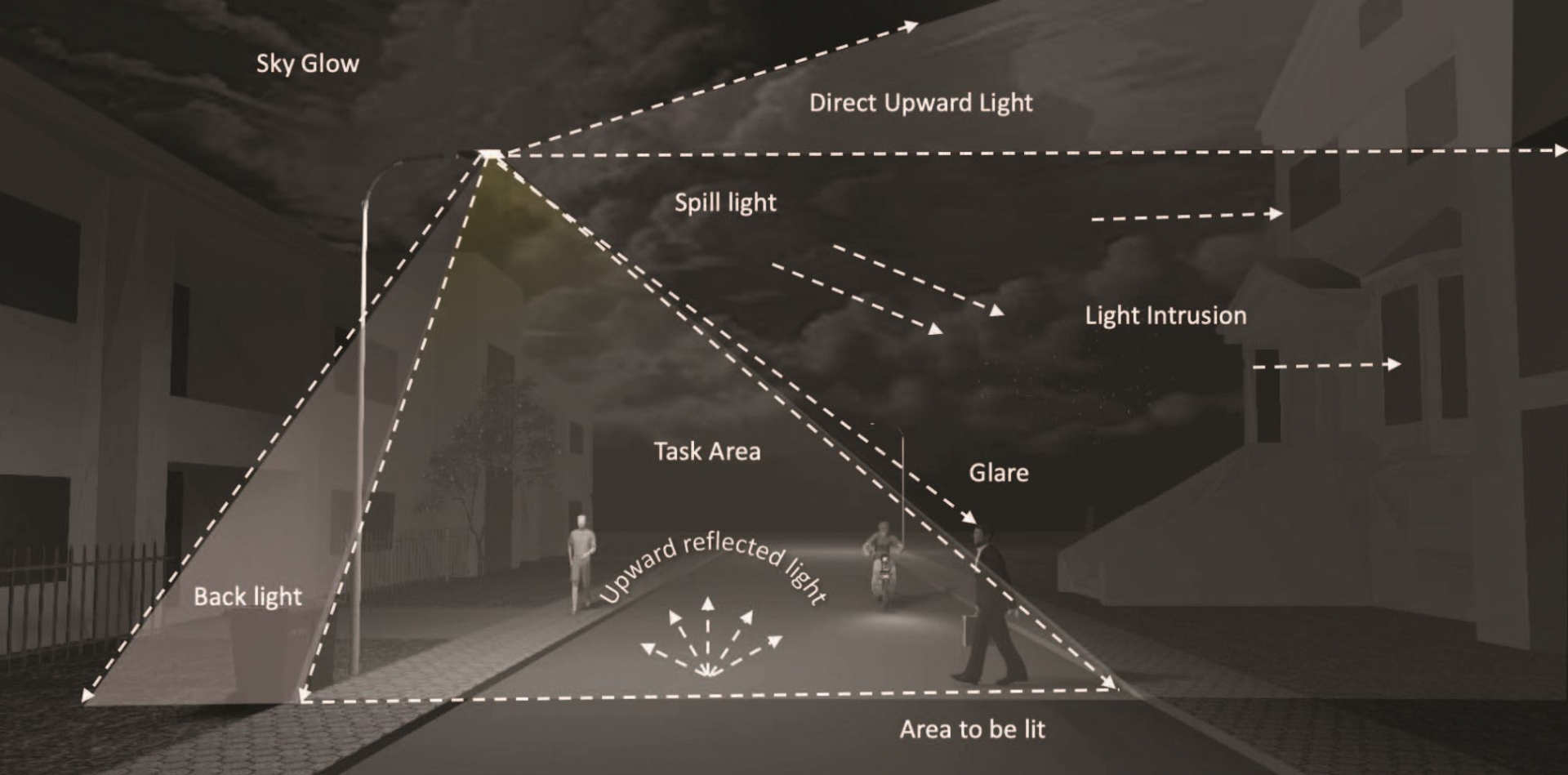
Dark Sky lighting refers to lighting that is designed to minimise light pollution, particularly light that spills upwards into the night sky or unnecessarily into surrounding areas.
It is based on internationally recognised principles developed by organisations such as DarkSky International and the Illuminating Engineering Society, which promote responsible outdoor lighting to protect the night environment.
In simple terms, DarkSky-compliant lighting:
- Direct light so it falls only when it’s needed
- Reduce glare and light spill
- Limits light upward (sky glow)
Why Is Light Pollution a Problem?
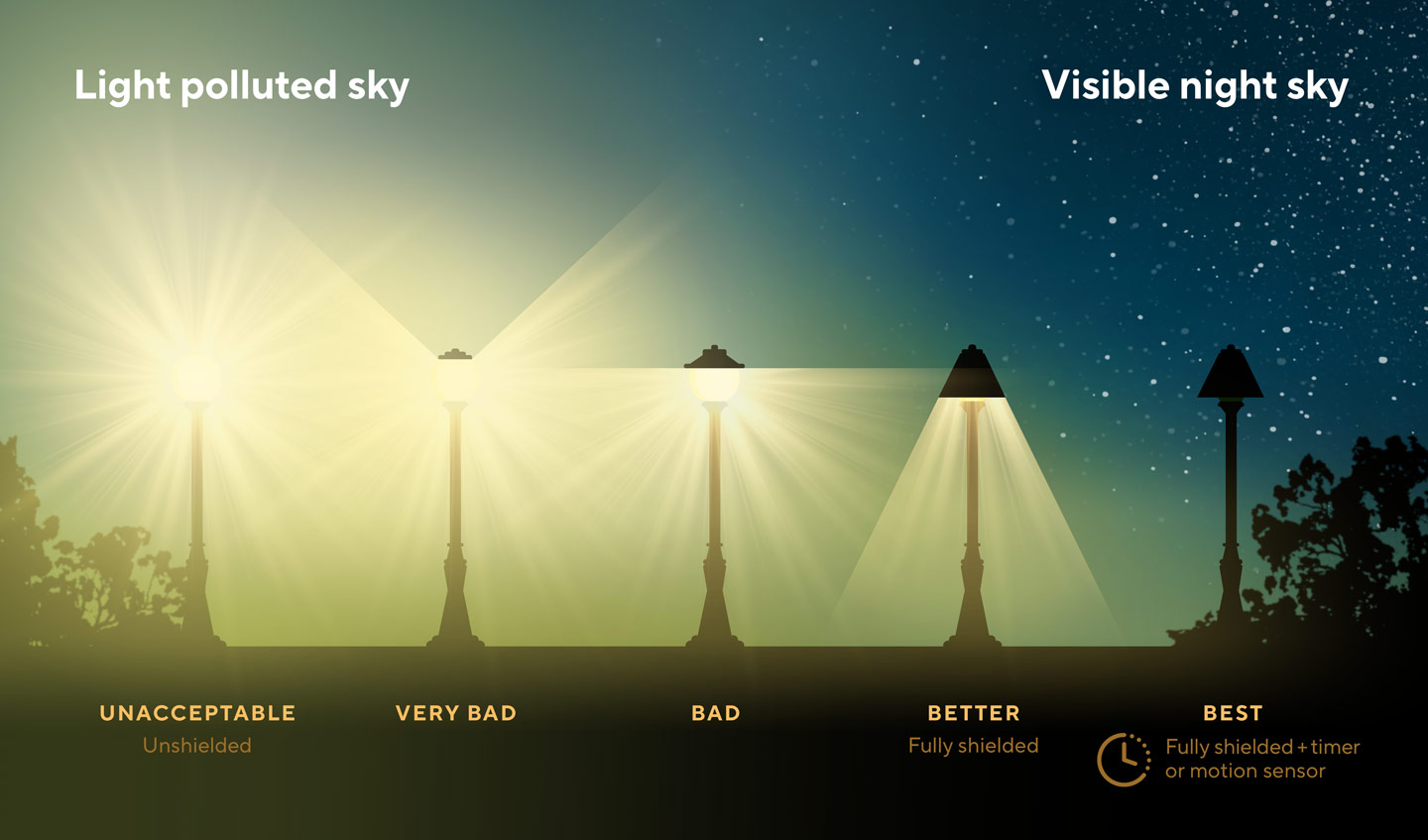
Light pollution isn’t just about losing visibility of the night sky; it has real impacts on both the environment and how lighting performs in built spaces.
Excessive or poorly controlled lighting can disrupt natural ecosystems, particularly for nocturnal wildlife, while also causing glare and visual discomfort in commercial environments. There’s also a growing aspect, with councils across Australia placing greater emphasis on controlling light spill and upward light, something that can affect approvals if not addressed early.
Why Dark Sky Lighting Matters for Your Projects
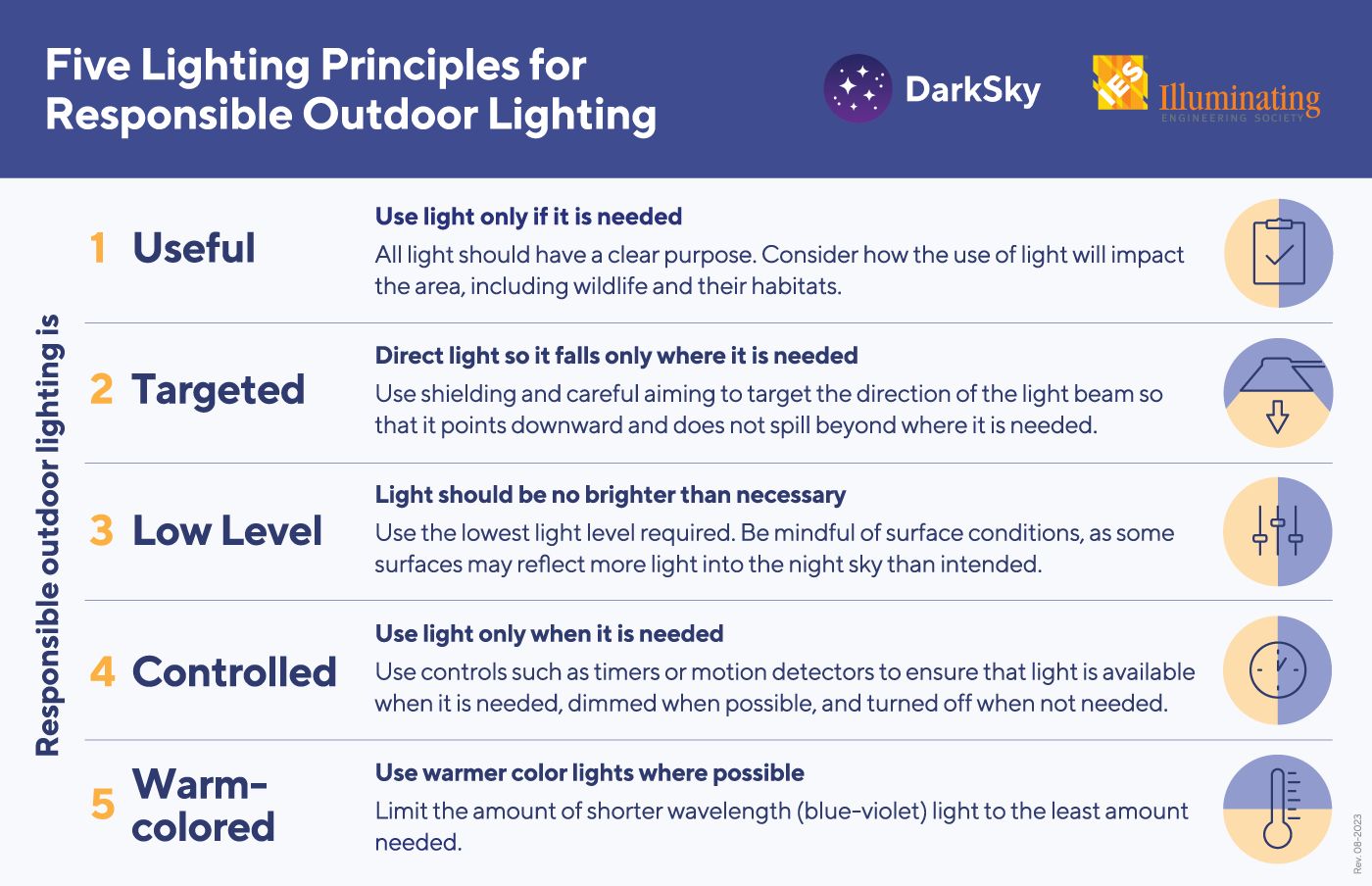
To achieve Dark Sky compliance, lighting design follows a set of recognised principles developed by DarkSky International and the Illuminating Engineering Society, often referred to as the Five Principles for Responsible Outdoor Lighting.
At its core, the approach is simple: use only the light you need, where you need it.
Instead of treating these as strict rules, they act as a practical guide for better lighting outcomes:
- Useful – Every light should serve a clear purpose.
- Targeted – Light should be directed precisely, typically downward, to avoid spill into unwanted areas.
- Low level – Use only the amount of light required. Over-lighting is one of the most common issues in exterior projects.
- Controlled – Lighting should operate only when needed, using timers, sensors, or dimming where possible.
- Warm-coloured – Lower colour temperatures (3000K or below) are preferred to minimise environmental impact and improve comfort.
When applied together, these principles help create lighting that is more efficient, more comfortable, and better suited to its surroundings while also supporting compliance requirements.
Why Dark Sky Lighting Matters for Your Projects
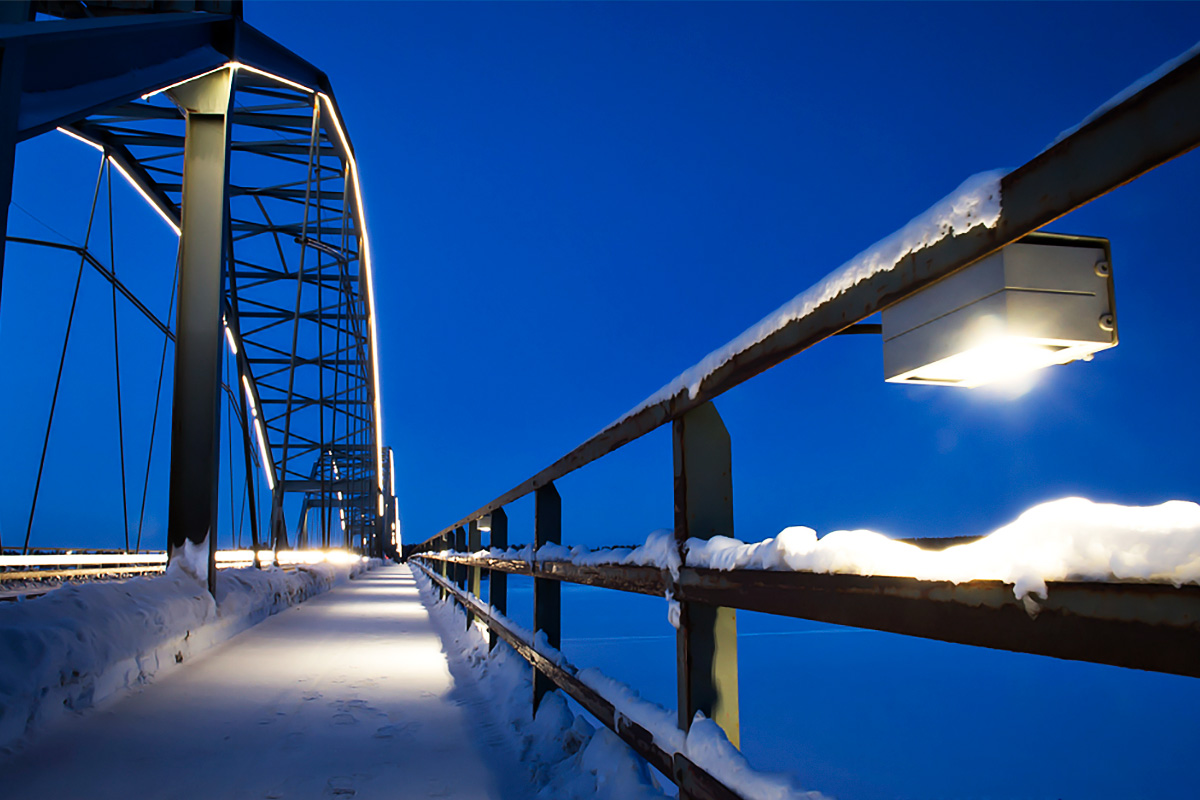
For many projects, Dark Sky lighting is less about theory and more about avoiding unnecessary complications. Addressing these considerations early can make approvals more straightforward and reduce the likelihood of redesigns later. It also results in lighting that feels more balanced, minimises glare, improves visual comfort and creates a better overall experience.
From a project perspective, it helps:
- Reduce the risk of compliance issues
- Improving overall lighting quality and user experience
- Support sustainability targets without overcomplicating design
Ultimately, it’s about delivering a solution that works, not just technically, but in the real-world environment it’s installed in.