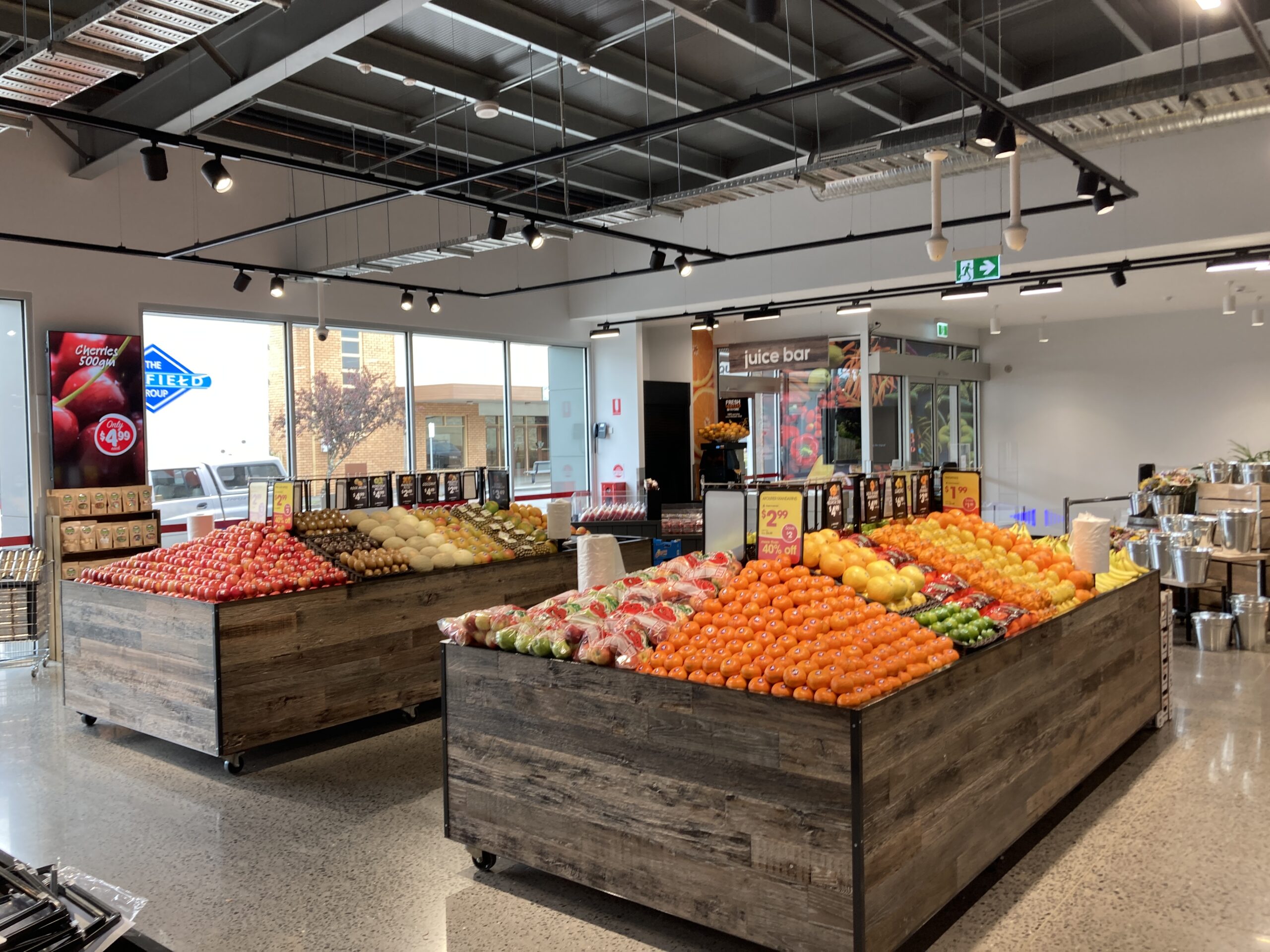
Lighting might seem like a background element in supermarket design, but it’s quietly doing more than you think. The right lighting can shape how customers feel, where they go, and ultimately, what they put in their carts. Let’s take a look at how supermarket lighting plays a surprising role in influencing shopper behaviour.
The Psychology Behind Lighting in Retail Environments
Humans are incredibly responsive to visual stimuli. In a retail setting, especially supermarkets where the environment is large and fast-paced, lighting acts as a silent influencer. It can create atmosphere, draw attention to products, and even affect emotions—all of which impact how shoppers navigate the store and what ends up in their carts.
For example:
- Warm lighting in bakery sections creates a cozy, homey feel.
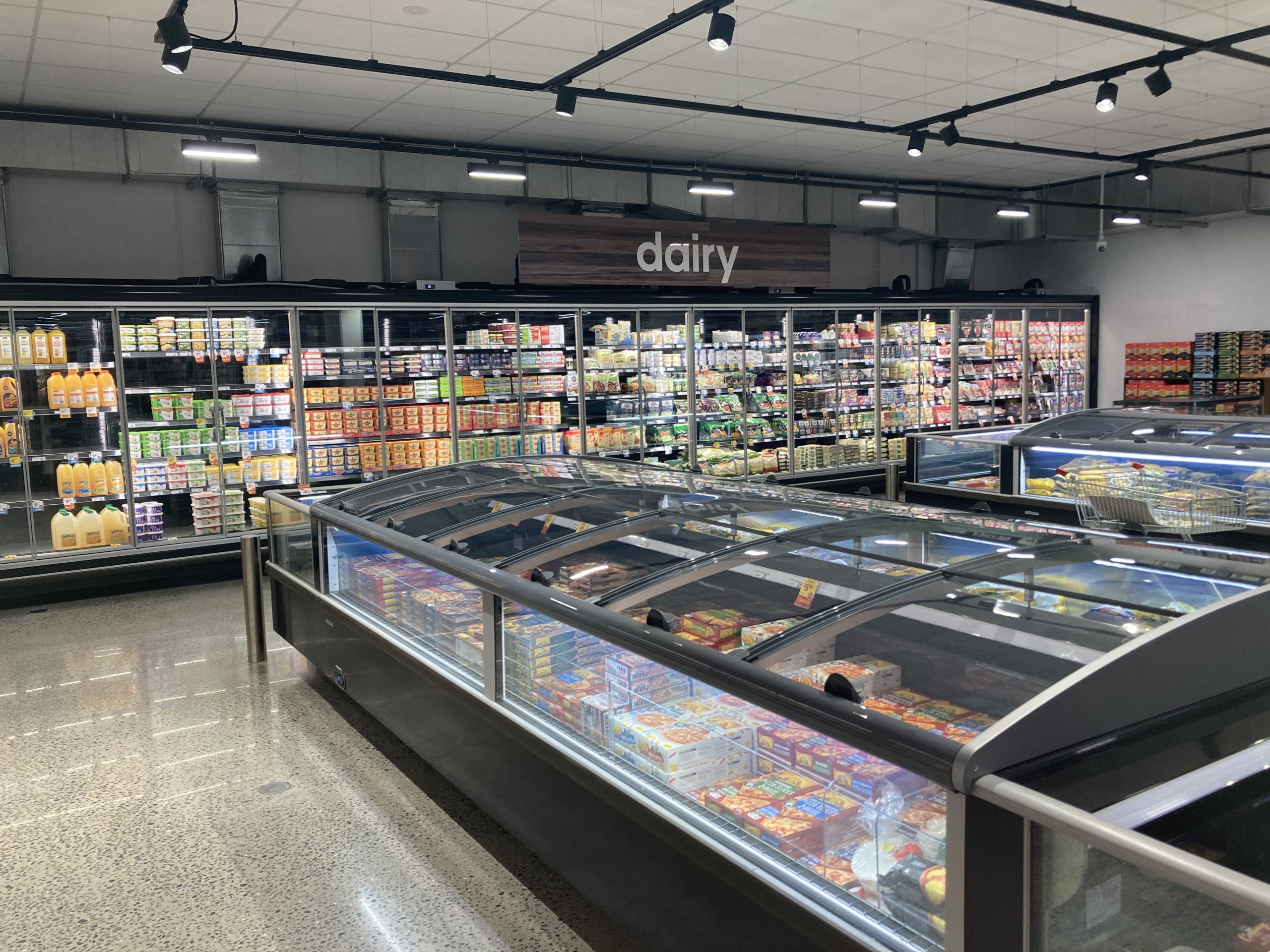
- Cooler tones in frozen food aisles reinforce freshness and cleanliness.
- Accent lighting on high-margin items can increase visibility and impulse buys.
Lighting Affects Perception of Freshness and Quality
In food retail, appearance is everything—and lighting controls how products are perceived. High CRI (Colour Rendering Index) lighting, typically CRI90+, makes fruits, vegetables, meats and seafood appear more vibrant, fresher and appealing.
If your tomatoes look dull or your leafy greens appear greyish, poor lighting might be to blame—not the produce itself. Shoppers associate rich colour and brightness with freshness, so lighting directly affects how confident they feel in your products.
Lighting as a Wayfinding and Merchandising Tool
Beyond aesthetics, lighting helps guide the customer journey. Brighter zones naturally draw the eye, helping you direct attention to feature displays, seasonal promotions, or high-margin departments.
By layering general, accent, and task lighting, supermarkets can create a visual rhythm that moves customers smoothly through the store, increasing both comfort and time spent shopping.
Enhancing Efficiency Without Sacrificing Experience
Modern LED systems allow supermarkets to balance efficiency with experience. Dimmable, tunable lighting and smart sensors can be utilised based on time of day or foot traffic, saving energy while maintaining consistent quality.
This makes it possible to lower operational costs while still delivering a premium shopper experience.
The Silent Sales Driver
The short answer? Yes—lighting really does influence what shoppers buy.
In a competitive retail landscape, lighting isn’t a background feature. It is the silent sales driver – guiding behaviour, elevating perception and increasing basket.
Supermarket lighting can create a positive shopping experience for customers and increase the workspace functionality for employees. As the range of products on offer becoming broader and more diverse, online shopping has become more accessible and convenient. This is why it’s important for supermarkets to consider lighting as an integral part of their store design. Different sections within the store have different requirements. We’ve put together a few key factors to consider when deciding what lighting works best for your store.
Fresh Produce
One of the most important areas to generate revenue in a supermarket is the fresh produce section. Often located at the entrance of the store, the fresh produce section should provide a welcoming and positive experience to entice customers to purchase goods.
Customers tend to purchase fresh produce more frequently than once a week due to its perishable nature. This results in higher product margins and a shorter shelf-life. It’s a key area for seasonal items and displaying the latest product offerings. Consider using track lights or pendants for accent lighting to indicate the important of the product displays. These can add depth and contrast to make the products stand out to the customers.
Colour is one of the main factors customers will use to determine the freshness and quality of the goods. Selecting the right colour temperature and colour rendering can create a natural fresh appearance. We recommend using a high-quality CRI to accurately represent the vivid colours of the produce making it look more authentic. This can also stimulate the appetite of customers and increase sales in this area.
Aisle Lighting
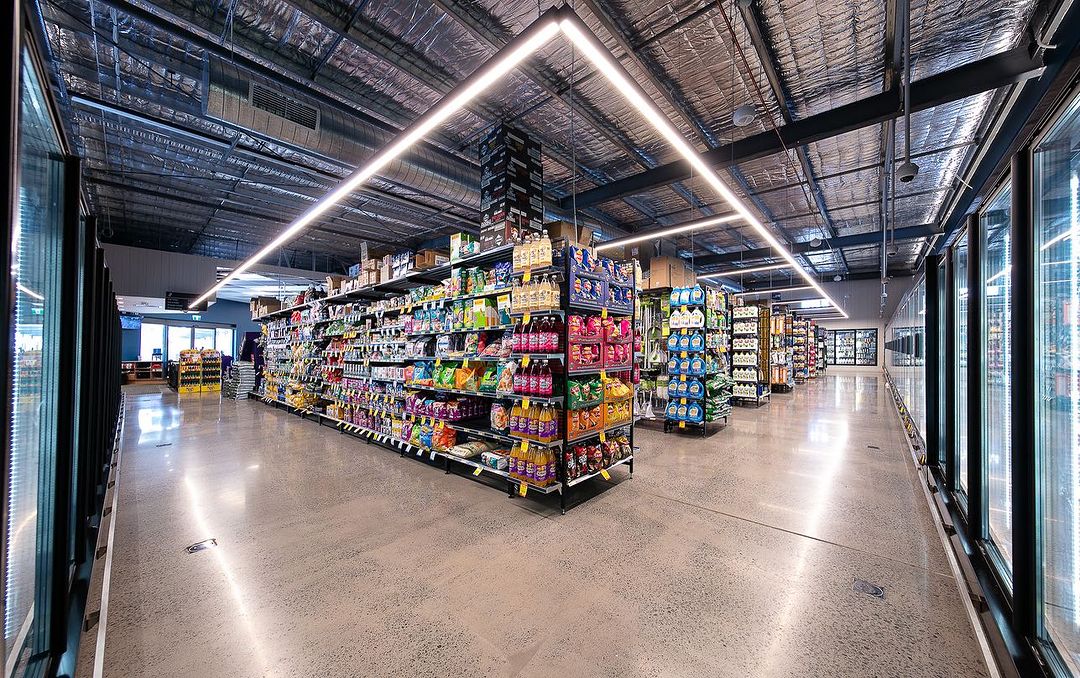
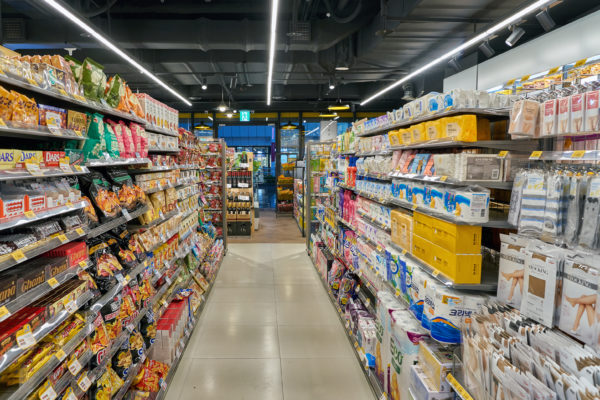
Supermarket aisles occupy a significant amount of floor space with a large proportion of products arranged on packed shelves. A good lighting system will provide product visibility and clearly guide customers within the space. We recommend using a continuous linear system in the centre of the aisle with uniformed vertical illumination. This allows customers to see the entire range of goods from the lowest to the highest shelf on both sides of the aisle. The lighting should be bright enough that customers can easily identify the products and distinguish the details between product offerings. Alternatively, track lights are another great solution offering flexibility that can be used for highlighting constantly changing product displays.
Checkout Registers & Point of Sale Stations
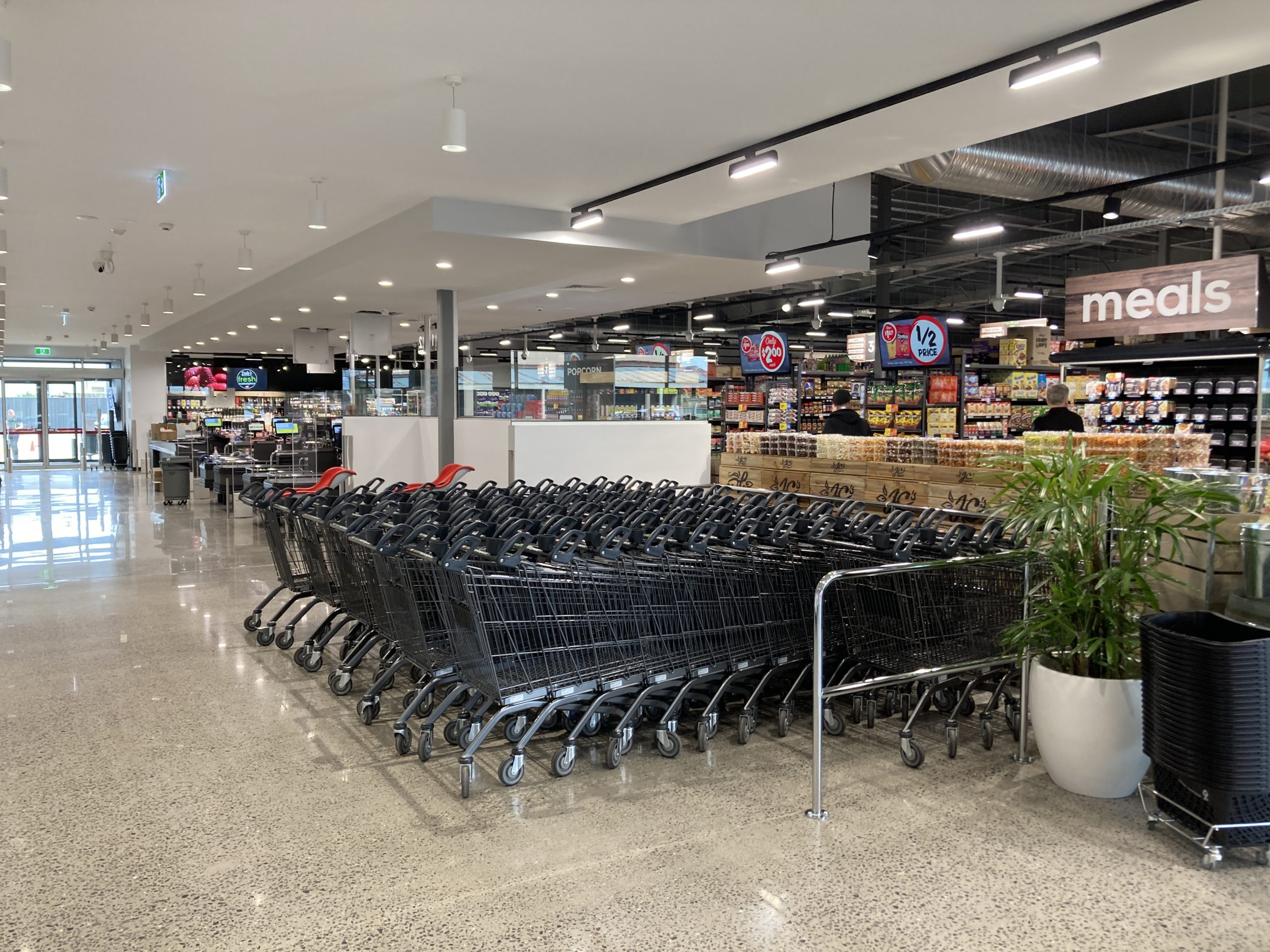
The checkout registers are a key zone for customers as they complete their purchases at the end of their shopping journey. The lighting should focus on functionality and be comfortable for workers as they perform their tasks. With staff looking at a screen for long periods of time, consider using low glare lighting to avoid eye strain and headaches. This is also a great opportunity for impulsive last-minute purchases, so ensure the registers and product displays are well illuminated.
Back of House
The back of house areas remains an important space for workers to complete their tasks. A key consideration for this area is functionality. Consider using low glare and comfortable task lighting for the offices, storerooms and refrigeration areas.
Similar to aisle lighting, the storeroom should be clearly visible for workers to easily identify where products are stored. In the refrigeration and food preparation areas, the lights need to be practical to allow workers to perform their tasks in a safe and efficient manner as well as meet food preparation standards.